David Montgomery obituary | History books | The Guardian
<p>US labour historian who approached the study of capitalism through workers' experiences</p>
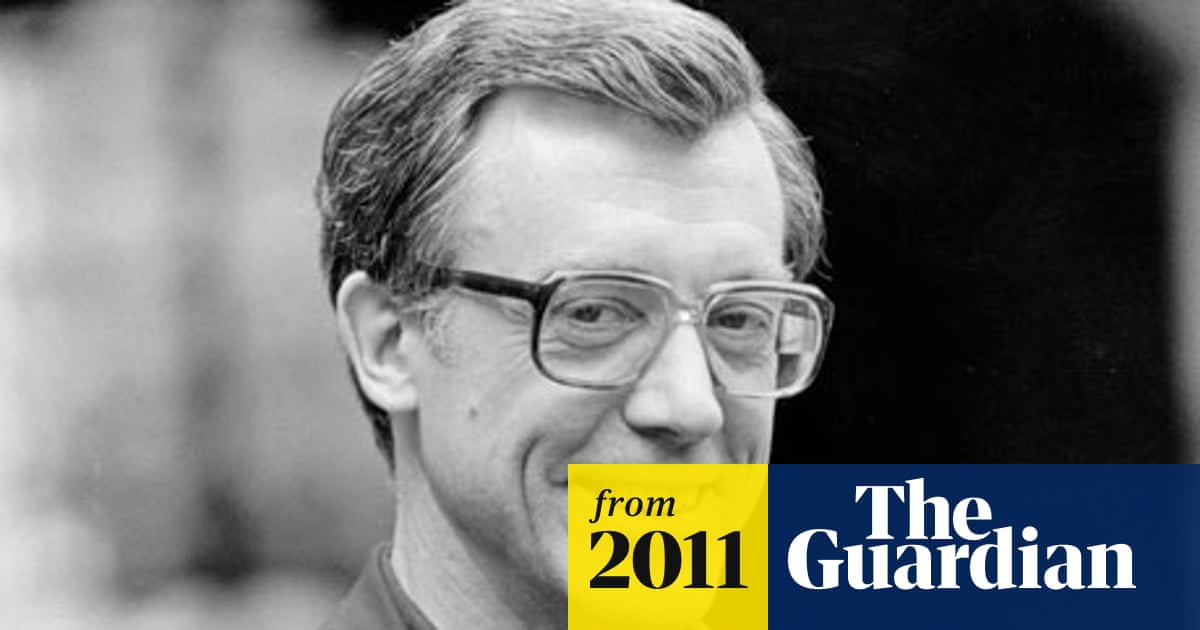
David Montgomery's practical experience of industrial relations - rare among American academics - came from the time he spent in the 1950s as an industrial organiser for the Communist party. Photograph: Michael Marsland/Yale University David Montgomery's practical experience of industrial relations - rare among American academics - came from the time he spent in the 1950s as an industrial organiser for the Communist party. Photograph: Michael Marsland/Yale University History books This article is more than 14 years old Obituary David Montgomery obituary This article is more than 14 years old US labour historian who approached the study of capitalism through workers' experiences Eric Foner Sun 11 Dec 2011 22.14 CET Share Prefer the Guardian on Google David Montgomery, who has died aged 84 of a brain haemorrhage, was one of the most prominent historians in the US and the model of a scholar-activist. Along with the late Herbert Gutman, he was the most influential practitioner of the "new labour history", which moved the study of workers away from the institutional history of unions to the workplace struggles, political ideologies and cultural values of the diverse groups who make up the American working class. Before entering academia, he spent several years as a shop-floor organiser for the Communist party, working with the United Electrical Workers, International Association of Machinists and Teamsters union, an experience rare among modern academics. Born in Bryn Mawr, Pennsylvania, Montgomery served in the Army Corps of Engineers during the second world war, including a stint at Los Alamos, New Mexico, where the atomic bomb was developed. After leaving the army he attended Swarthmore College in Pennsylvania. In the 1950s, Montgomery devoted himself to factory organising. Hounded by the FBI, he was dismissed from several industrial jobs. He left the Communist party in 1957 in the aftermath of the Soviet invasion of Hungary, and, as he later recalled in an interview with the Radical History Review, because of the party's "stifling" intellectual atmosphere. But he remained deeply influenced by two aspects of his communist experience – Marxist analysis and a commitment to racial equality. Class remained his key category of historical analysis, although he was keenly aware of the multiracial, multi-ethnic nature of the American labour force. He saw class consciousness not as adherence to a particular ideology but as workers' day-to-day activities in opposition to their employers. Unions, whatever their political outlook, were for Montgomery places of human solidarity, their very existence a rebuke and challenge to the dog-eat-dog competitiveness of market society. What he witnessed on the shop floor convinced him that "most of what was written in academic literature about the inherent conservatism of American workers ... was simply untrue." He decided to set the record straight. Montgomery received his doctorate in history from the University of Minnesota in 1962. He taught labour history for 14 years at the University of Pittsburgh, then moved to Yale University as a professor of history. A powerful, charismatic speaker, he attracted legions of students to his classes. Montgomery's writings reconceptualised the history of American workers during the 19th and early 20th centuries. His first book, Beyond Equality (1967), altered historians' understanding of the era of reconstruction that followed the American civil war by focusing on the labour question in the northern states rather than the fate of the emancipated slaves. The war, a disaster for northern workers because of rampant inflation, spawned the emergence of the nation's first mass-labour movement, whose demands challenged the adequacy of the ideal of legal equality promoted by the radical republicans. The book's title suggested that beyond legal equality – a momentous achievement for the former slaves – lay issues of economic justice that the political system proved incapable of addressing. On the submerged rock of class conflict, he argued, the radical project foundered. Montgomery then turned his attention to the rise and fall of labour militancy in the late 19th and early 20th centuries. In Workers' Control in America (1979), he highlighted how groups of skilled industrial workers – iron puddlers, miners, and others – "controlled" the nature and pace of work, and how their shopfloor power was eventually eroded by mechanisation and the introduction of bureaucratised systems of factory management. The Fall of the House of Labor (1987) expanded his compass to include not only these privileged workers, but machine operatives in factories and the unskilled manual labourers who built the era's railroads, subways and sewer systems. In the early 20th century, management, with the assistance of the national state, launched a ferocious assault on workers' prerogatives. By the 1920s, Montgomery wrote, "modern America had been created over its workers' protests...